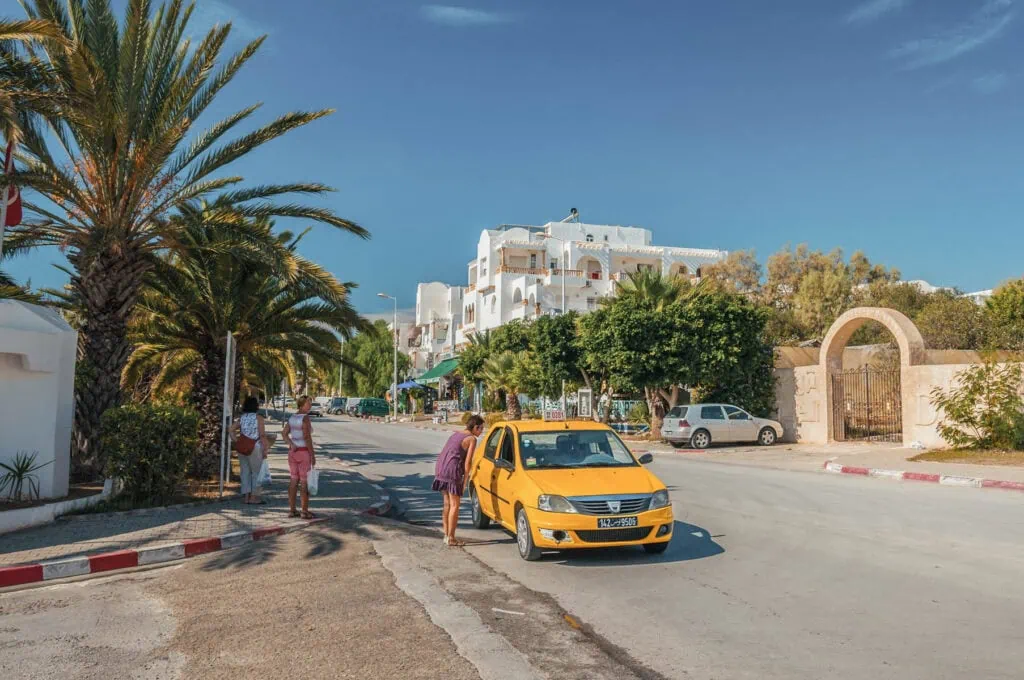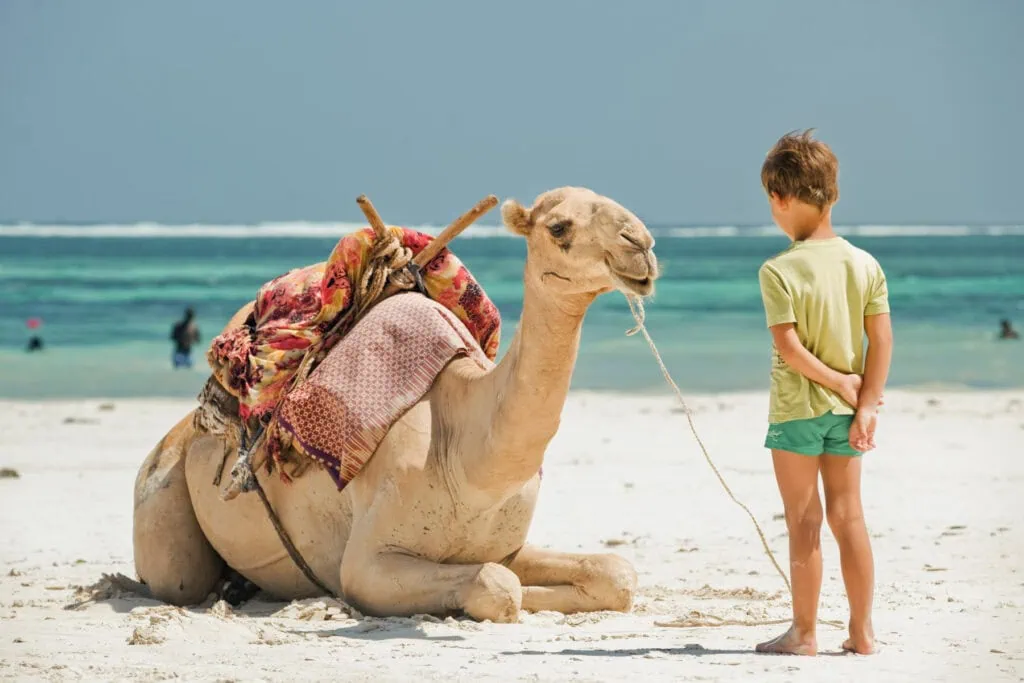
At the crossroads of civilisations, Tunisia’s culture is a vibrant mosaic shaped by centuries of Berber, Phoenician, Roman, Arab, Ottoman, and French influence. From the medina of Tunis to the ruins of Carthage and the coastal rhythms of Sfax, this is a land where time layers beautifully – where age-old Tunisian traditions coexist with contemporary life. Visitors will find a country rich in craftsmanship, colour, and community, where ancient customs continue to shape everyday moments. Whether you’re exploring bustling souks or sipping mint tea under olive trees, Tunisia invites you to discover a heritage that is deeply rooted and endlessly expressive.
Embracing Tunisian Hospitality
In Tunisia, hospitality is not just a gesture – it’s a heartfelt tradition. Whether you’re meeting someone for the first time or being welcomed into a family home, warm greetings and polite inquiries are key to social interaction. A gentle handshake, often followed by placing the hand on the heart, reflects both respect and sincerity.
Family and community are central to Tunisian life. Gatherings are frequent and often multigenerational, where stories, meals, and laughter are shared freely. Mealtimes, especially, are a cherished expression of togetherness. Visitors may be invited to share dishes from a communal platter, a sign of inclusion and generosity. Offering or accepting mint tea is more than refreshment – it’s a meaningful social ritual.
When visiting religious sites or traditional neighbourhoods, respectful etiquette is appreciated. Modest clothing, particularly for women, is encouraged – long skirts, covered shoulders, and scarves where necessary. Understanding and honouring Tunisia’s traditional dress and customs is not just about politeness; it’s a way to engage with the country’s rhythm of life with grace and curiosity.
Expressions of Tunisian Identity
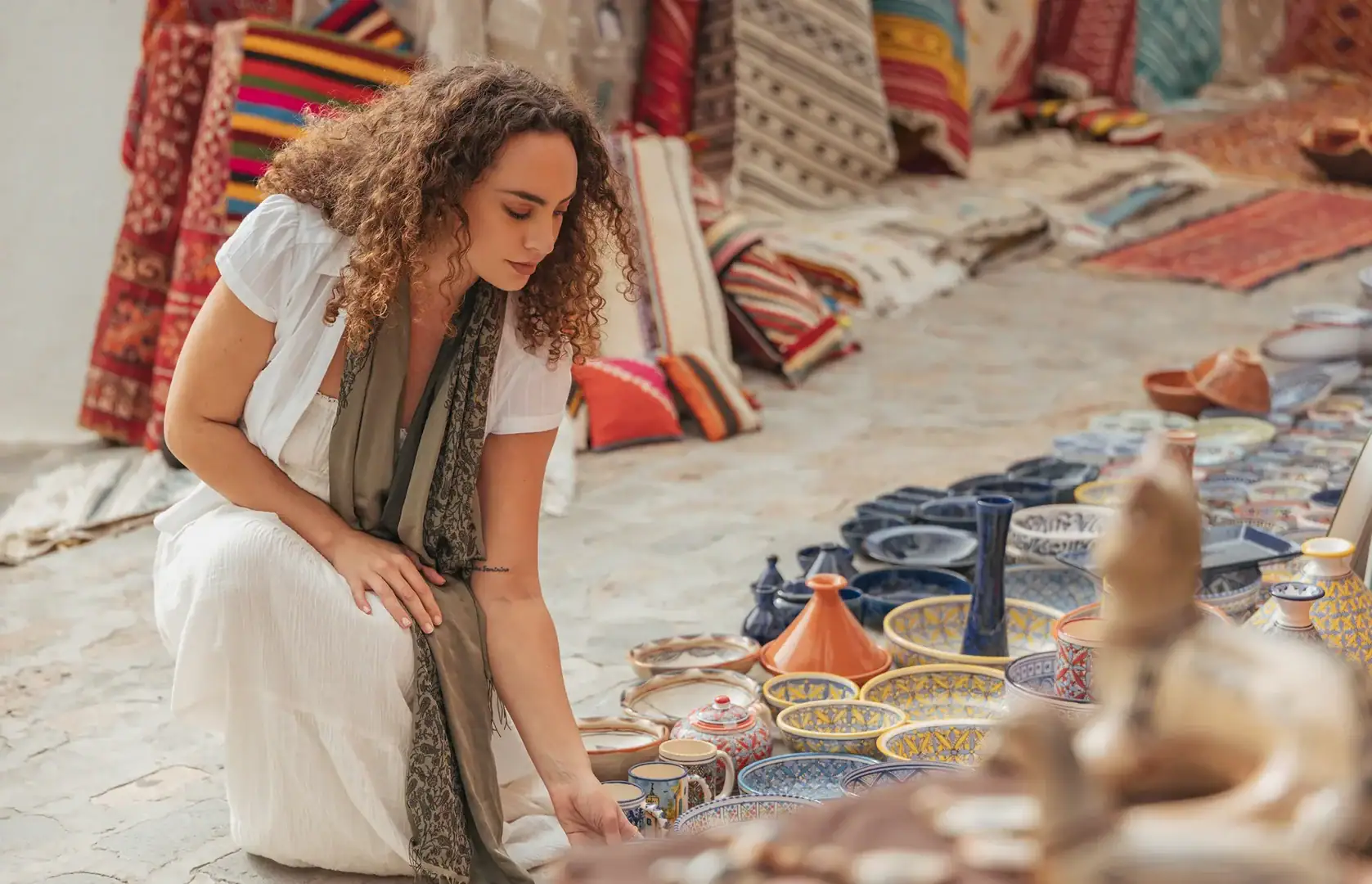
Tunisia’s soul is vividly expressed through its craftsmanship, music, and market culture. Traditional crafts, many of which have been passed down through generations, are still proudly practiced today. In towns like Nabeul or Kairouan, artisans hand-shape ceramics with intricate blue-and-white patterns, weave wool carpets using ancient Berber motifs, and forge jewellery and leather goods that reflect regional identity and artistry.
Music, too, carries Tunisia’s layered history. Malouf, a classical Andalusian-inspired style, echoes through cultural festivals and family celebrations, while Mezwed, with its distinctive bagpipe and percussion, pulses through local events and urban celebrations.
No cultural immersion is complete without a visit to the souks – lively marketplaces where you can browse handwoven textiles, taste spices, and chat with craftspeople. Whether you’re picking up a hand-painted bowl or simply soaking in the atmosphere, every item and interaction tells a story of heritage, pride, and creativity.
Experiencing Tunisian Festivals & Celebrations
Tunisian religion and culture are deeply intertwined, and the country’s festivals and traditions reflect this blend beautifully. Eid al-Fitr and Eid al-Adha, the most significant Islamic holidays, are celebrated with family feasts, mosque visits, and generous acts of giving. Streets come alive with warmth and anticipation, offering visitors a glimpse into sacred rhythms of life.
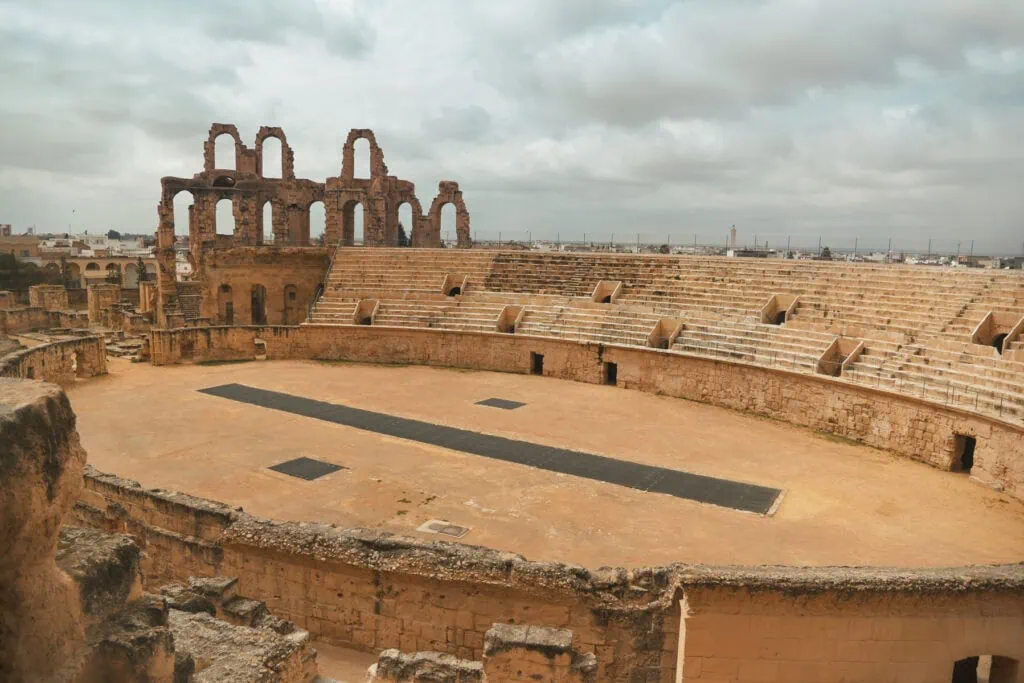
On the artistic side, the Carthage International Festival brings together performers from around the world in a Roman amphitheatre under the stars – music, theatre, and dance reverberate through ancient stone in one of Tunisia’s most iconic settings.
Across the country, local and regional celebrations – from olive harvest festivals to desert parades – offer immersive, joyful windows into Tunisia’s many cultural identities. For more insight into Tunisia’s rich past, explore our blog on historical sites and day trips.
A Taste of Tunisian Heritage
In Tunisia, food is more than nourishment – it’s a cornerstone of connection, celebration, and cultural identity. The country’s cuisine blends Mediterranean freshness with North African spice, creating flavours that are bold, aromatic, and unforgettable.
Start with the national dish: Couscous, often served with lamb, fish, or vegetables in a spiced broth. Try Brik, a crispy pastry filled with egg and tuna, or savour a warming Tunisian Tajine, distinct from its Moroccan counterpart and rich with herbs and cheese. No meal is complete without a spoonful of Harissa, Tunisia’s signature chilli paste.
Mint tea flows through daily life, a symbol of hospitality often accompanied by pine nuts or almonds. In coastal towns and city corners, you’ll find coffee shops where social life thrives – read more in our guide to Tunis’s best coffee spots.
For a deeper dive into local flavours, don’t miss our recommendations on authentic Tunisian restaurants.
Stay at Verdi Hotels and Explore Tunisia’s Culture
Tunis is a city of contrasts – ancient and modern, tranquil and vibrant. And at Verdi Hotels, we invite you to experience Tunisia’s culture from the inside out. Rooted in the rhythm of our neighbourhood and connected to the community around us, our hotel in Tunis is your gateway to authentic discovery.
Whether you’re wandering souks by day or sipping tea under the stars, Verdi offers a stay that’s both comfortable and meaningful. Our hosts are here to help you find the hidden corners, local crafts, and real stories that make Tunisia unforgettable.
Book your stay at Verdi Tunis Beach Resort.