How public transport works in Tunisia
Whether you’re navigating ancient cities or heading off into the Sahara, public transportation in Tunisia offers a surprisingly wide and well-used network. Affordable and frequent, it’s the primary way locals get around – and a great option for curious travellers, too.
From trains and buses to louages (shared taxis), Tunisia’s system is designed for efficiency over luxury. Expect plenty of character, spontaneous moments, and a direct route into local life. If you’re wondering how to get around Tunisia without your own car, this guide breaks it all down into easy, travel-friendly steps.
Trains in Tunisia (SNCFT)
Operated by SNCFT (Société Nationale des Chemins de Fer Tunisiens), Tunisia’s rail network connects major cities including Tunis, Sousse, Sfax, and Gabès. It’s a scenic and affordable way to travel long distances – especially if you prefer staying above ground and soaking in the view.
There are two main classes: first class, which offers reserved seating and air-conditioning (highly recommended in summer), and second class, which is more basic but still reliable. Trains are generally comfortable, though delays do happen – especially outside of peak commuter times.
You can book tickets at stations or online via SNCFT’s website, although tech glitches are not uncommon. Trains are best used for coastal journeys and long-haul routes where you’d like a break from the road. If trains in Tunisia are part of your travel plan, try the Tunis–Sousse–Sfax route – it’s one of the most travelled, and for good reason.
Louages – shared taxis for long distances
Louages are the heart of Tunisia’s intercity road travel. These white shared taxis (with red or blue stripes, depending on the region) leave only when full, making them a flexible but slightly unpredictable option. They’re faster than buses, cheaper than private taxis, and offer a true “travelling like a local” experience.
Louage stations are found in every major city and town – ask for the station louage. Prices are fixed by the government and paid in cash, usually just before departure. Expect to share the ride with other travellers heading in the same direction.
They’re ideal for spontaneous trips, especially between towns not well served by rail. That said, if you’re hauling heavy luggage or prefer a bit more personal space, you might find the experience less convenient. For adventurous visitors getting around Tunis without a car, louages are a budget-savvy way to explore.
Buses in Tunisia
Tunisia’s bus network is extensive, serving both urban and rural areas. There are two main types: long-distance coaches operated by SNTRI (the national bus company) and regional buses managed by local companies like Transtu (in Tunis).
SNTRI buses cover longer journeys and are fairly punctual. You can reserve your ticket at a bus station or through their website. Intercity buses offer an affordable alternative to trains or louages, and they’re especially handy for inland destinations not served by rail.
Regional buses are less predictable but run often and cost very little. They’re good for short hops between towns, though comfort levels vary. Buses are a strong option when travelling off the tourist track, making them a go-to for budget-conscious visitors exploring the country’s depth and diversity.
Urban transport in Tunis
If you’re staying in Tunis, you’re in luck – this city is surprisingly easy to get around. The Tunis Metro, a light rail system, covers most neighbourhoods and operates like clockwork. Tickets are cheap, and the trains are clean, if a bit crowded during rush hour.
Then there’s the TGM train – Tunisia’s oldest railway line – which runs from central Tunis to Carthage, La Marsa, and Sidi Bou Said. This scenic ride along the coast is an experience in itself.
Local buses fill the gaps between metro and TGM stops. They’re frequent, inexpensive, and a great way to see how locals move through their day. For visitors exploring beyond the capital, urban transport in Tunis offers a strong foundation.
Taxis and ride options
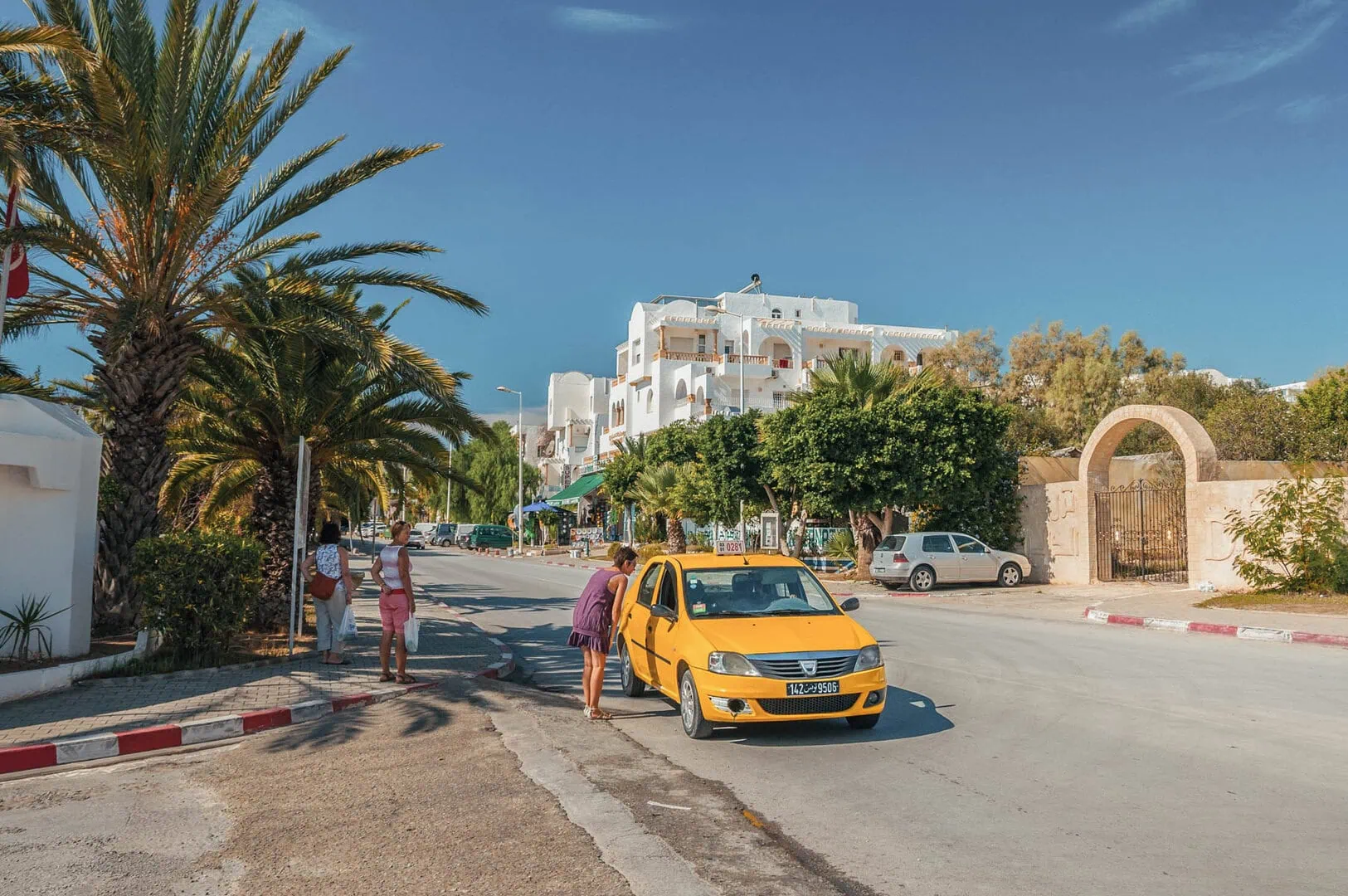
Standard yellow taxis are plentiful in Tunis and other large cities. They’re metered by law, but drivers don’t always turn the meter on – especially with tourists. As a rule of thumb, taxis in Tunisia cost far less than in Europe, but it’s best to ask for the meter (“mètre, s’il vous plaît”) or agree on a fare before departure.
Apps like Bolt are available in some cities and can help you avoid haggling. Taxis are ideal for short trips or when you’ve had a long day and want a direct ride home. Just make sure to carry small change, as drivers often don’t have much.
Which transport suits your travel style?
- Trains: best for coastal routes (Tunis–Sousse–Sfax) and relaxed long-distance travel
- Louages: fastest and cheapest between towns, ideal for flexible travellers
- Buses: good for inland destinations and budget travel
- Metro & TGM: perfect for getting around Tunis and visiting Carthage or Sidi Bou Said
- Taxis: best for short urban trips or late evenings
Many travellers combine several options during one trip and that’s often the smartest approach.
Costs, safety, and cultural tips
Using public transport in Tunisia is generally safe, affordable, and friendly. Expect to pay less than €1 for a metro ride in Tunis, and around €5–€10 for long-distance travel by bus or louage. First-class train tickets are usually under €15, even on longer routes.
Dress modestly, especially when travelling to smaller towns or religious sites. Keep your belongings close – petty theft is rare but possible on crowded routes. And don’t be surprised if someone offers help or strikes up a conversation – Tunisian hospitality is real and warm.
One of the biggest mistakes? Assuming everything runs to schedule. Leave wiggle room and take delays in stride – it’s all part of the adventure.
When to use public transport vs private transport
For solo travellers or couples, public transport is ideal. It’s immersive, economical, and lets you connect more closely with local life. But for families, groups, or those visiting remote areas, private transport can be the better choice.
Renting a car gives you freedom, especially in southern Tunisia where distances grow and services thin out. Hiring a driver is another smart option if you want the flexibility of private travel without the stress of navigating.
Ultimately, it comes down to time, comfort, and confidence. If you’re wondering how to get around Tunisia best, mix and match – start public in the north, then go private for desert stretches or rural explorations.
Ask at Verdi Hotels for travel information
Still not sure where to start? When you stay at Verdi Hotels Tunis, our local hosts are always happy to help you navigate your journey. Whether you’re hopping on the metro, catching a louage, or arranging a private driver, we’ll guide you in the right direction – with real, insider advice.
Want to know the quickest route to Carthage? The most scenic stop on the TGM line? Or simply the best place to grab a coffee between buses? Just ask. Verdi Hotels makes exploring the capital and beyond smooth, stress-free, and genuinely local.