Table of Contents
Tunisia is safe, affordable, and far more rewarding than most first-time visitors expect. It sits just 150km south of Sicily, packs Roman ruins, Saharan desert, ancient medinas, and sun-drenched coastline into a country smaller than the UK — and the vast majority of international visitors travel without incident.
At Verdi Tunis Beach Resort, we watch the same thing happen every season. Guests arrive a little nervous. Within days, they’re asking how to stay longer.
This guide covers everything you need before your first trip: visas, safety, culture, transport, food, costs, and the highlights worth building your itinerary around. Everything you need to arrive with confidence — and leave with something you didn’t expect.
What to know before visiting Tunisia for the first time
Tunisia doesn’t require a great deal of preparation — but a few basics are worth knowing before you land.
Do I need a visa to visit Tunisia?
Most EU, UK, and US passport holders enter visa-free for up to 90 days. Your passport must be valid for at least six months beyond your travel dates. Exemptions vary by nationality, so confirm your status before travelling.
What currency does Tunisia use?
The Tunisian Dinar (TND) is a closed currency — you cannot buy it before arrival. Exchange at the airport or a bank in the city when you land. ATMs are plentiful in Tunis and resort areas. Carry smaller notes for markets and street food; change for large bills is not always available.
Should I get a local SIM card?
Yes — it’s one of the easiest and cheapest upgrades you can make. Pick up a SIM from Ooredoo or Tunisie Telecom at the airport. Data is inexpensive and 4G coverage is solid across main cities and coastal areas. Expect it to drop in remote desert areas.
What language is spoken in Tunisia?
Arabic (specifically Tunisian Darija) is the day-to-day language. French is widely understood in cities, hotels, and tourist areas — a few phrases will go a very long way. English is increasingly common but don’t count on it outside tourist zones.
When is the best time to visit Tunisia?
Spring and autumn are the sweet spot — warm enough for the coast, comfortable for sightseeing and the desert. Summer is peak beach season: hot and lively, particularly along the northern coast. Winter is mild, quiet, and good value.
Spring and autumn are the sweet spot — warm enough for the coast, comfortable for sightseeing and the desert. Summer is peak beach season: hot and lively, particularly along the northern coast. Winter is mild, quiet, and good value.
Season | Months | Best for | Temp range |
|---|---|---|---|
Spring | March – May | Sightseeing, medinas, hiking, ruins | 15°C – 27°C |
Summer | June – August | Beach & coastal resorts | 28°C – 38°C+ |
Autumn | September – November | Desert, ancient sites, photography | 17°C – 30°C |
Winter | December – February | Quiet exploration, budget travel | 8°C – 18°C |
What about visiting during Ramadan?
Ramadan is a culturally rich time to visit if you approach it with awareness. Restaurants and cafés close during daylight hours, reopening after Iftar (sunset). Plan meals accordingly, avoid eating or drinking in public during the day, and expect a different — often beautiful — atmosphere after dark.
Is Tunisia safe for tourists? What first-timers need to know
This is the question we’re asked most before a first visit — and it deserves a straight answer.
Tunisia is safe for tourists in its main visitor areas. The coastal resorts, Tunis, Sousse, and the major historical sites receive consistent visitor traffic year-round. The hospitality is genuine; Tunisians take real pride in how guests are looked after.
“Tunisia rewards the traveller who arrives prepared and open-minded. We wouldn’t have built a home here if we didn’t believe in it wholeheartedly.”
Standard travel precautions apply: keep copies of documents, stay alert in busy markets, and use registered taxis or hotel-arranged transport rather than unmarked vehicles.
Remote border regions near Libya and Algeria carry active travel advisories — check your government’s official guidance (UK FCDO, US State Department) before travelling and stick to well-trodden tourist routes on a first visit. There’s more than enough to fill two weeks without venturing near these areas.
SAFETY TIP
Register your trip with your country’s travel alert service (e.g. UK FCDO Travel Aware, US STEP) so you receive updates and can be contacted in an emergency.
Is Tunisia safe for solo female travellers?
Solo female travellers do visit Tunisia successfully, though it requires more awareness than some destinations. Verbal harassment can occur, particularly in busy urban areas. Dressing modestly, using hotel-arranged taxis, and staying in well-trafficked areas all reduce unwanted attention significantly. Our team at Verdi are always happy to advise on neighbourhoods and transport.
Cultural norms and etiquette: what to know before you go
Tunisia is a majority-Muslim country with a cosmopolitan edge — particularly in Tunis and coastal resorts. Cultural awareness is noticed and appreciated. Most of it comes down to respect and attentiveness.
What should I wear in Tunisia?
At beach resorts, swimwear is entirely appropriate poolside and on the coast. When visiting medinas, mosques, or local neighbourhoods, cover shoulders and knees — light layers work well year-round and mean you’re never caught out.
Mosques and religious spaces
Remove shoes before entering mosques. Dress modestly. Be quiet and observant inside. Some mosques are not open to non-Muslim visitors — look for signage or ask before entering.
Greetings and social customs
A warm As-salamu alaykum is always received well. Don’t rush greetings — asking after someone’s wellbeing before getting to business is genuinely valued here. Handshakes are common between men; with women, follow their lead.
Photography etiquette
Always ask before photographing people, especially in markets and rural areas. Most are happy to oblige once you’ve made a connection. Avoid photographing military sites or government buildings.
Tipping in Tunisia
Not compulsory, but appreciated. Round up or leave 10% in restaurants; small tips for guides, drivers, and hotel staff are always warmly received.
For a deeper look at the traditions shaping daily life here, our guide to Tunisia’s rich culture and enduring traditions is worth reading before you travel.
Getting around Tunisia: transport tips for first-time visitors
Tunisia is more navigable than most first-timers expect. Getting between places is part of the experience — and the options range from excellent value to genuinely characterful.
Trains
The SNCFT rail network links Tunis to Sousse, Sfax, Tozeur, and several other cities. Trains are clean, affordable, and a lovely way to watch the landscape change. Book in advance for longer routes in summer.
Louages (shared taxis)
This is how Tunisians actually travel. Louages are shared long-distance taxis that depart when full from fixed stations in each city — no timetable, but they run constantly and cost very little. Tunis to Sousse is roughly 10–15 TND. Spontaneous, cheap, and genuinely local.
City taxis
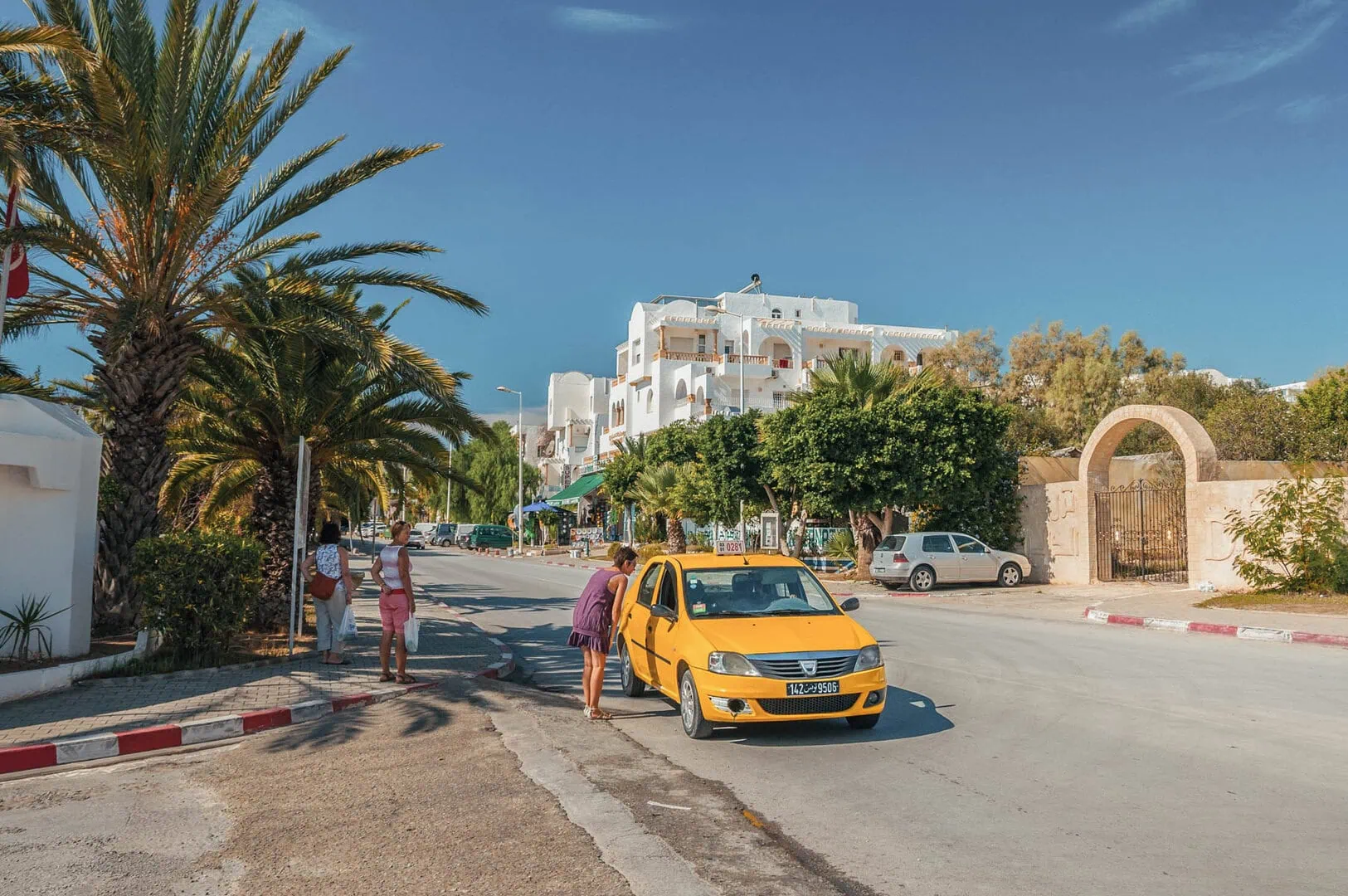
Yellow taxis in cities are metered and reliable — always confirm the meter is running at the start. Avoid taxis waiting directly outside tourist sites; hailing one that’s just dropped off a local often gets a fairer rate.
Car hire
Hiring a car makes sense if you want to cover ground independently. Roads connect major sites well, though driving standards can be unpredictable and driving after dark outside cities is not recommended. You’ll need a credit card and an international driving licence.
Organised tours and day trips
For first-time visitors tackling the Sahara, Dougga, or the Medina of Tunis, a guided day trip removes logistical stress and adds real context. Our team at Verdi Tunis Beach Resort work with guides we trust — ask at reception and we’ll point you in the right direction.
Our full guide to getting around Tunisia by public transport covers the detail if you want to plan ahead.
How long should you spend in Tunisia on a first visit?
A minimum of seven days gives you enough time to experience Tunis, its coastal surroundings (Carthage, Sidi Bou Said), and at least one site further south. Ten days adds the south coast comfortably — El Jem, Sousse, Kairouan. Two weeks allows the Sahara without feeling rushed.
Bear in mind: Tunisia looks compact on a map. The drive from Tunis to the Sahara near Douz takes seven to eight hours. Cluster your destinations rather than criss-crossing the country — your itinerary will be better for it.
Our 7-day Tunisia itinerary is a good starting framework if you’re working from scratch.
Best places to visit in Tunisia on a first trip
Tunisia packs an unlikely range into a small country — ancient Rome, Islamic architecture, Saharan desert, and Mediterranean coastline, often within a day’s drive of each other. Here’s where we’d point a first-time visitor.
Destination | Why it works for a first visit | Suggested time |
|---|---|---|
Tunis Medina | UNESCO-listed, living neighbourhood — souks, spice sellers, Zitouna Mosque | Half day minimum; full day to go deep |
Sidi Bou Said | Blue-and-white clifftop village — mint tea, Gulf views, 20 mins from Tunis | 1–2 hours; longer if you find a terrace you can’t leave |
Carthage | Ancient civilisation ruins on the coast — the Antonine Baths are the standout | Half day; pairs naturally with Sidi Bou Said |
Dougga | Rome’s best-preserved provincial capital — temples, theatre, and almost no crowds | Half to full day from Tunis |
El Jem | Roman amphitheatre larger than the Colosseum — extraordinary and almost empty | 2–3 hours; combine with Sousse overnight |
The Sahara | Ksour, Star Wars locations, troglodyte dwellings, and the edge of the desert | Full day or overnight from Douz or Matmata |
Our guides to Tunisia’s historical landmarks and the best things to do in Tunisia will help you decide what to prioritise.
Food, money, and daily costs in Tunisia
Tunisian food is one of the genuine revelations of the country — aromatic, generous, and rooted in local ingredients and tradition. Costs, meanwhile, are low by almost any European standard.
What food should I try in Tunisia?
Start with these:
- Brik — a crispy pastry filled with egg, tuna, or cheese
- Lablabi — a warming, deeply spiced chickpea broth
- Mechouia — grilled pepper and tomato salad, served cold
- Couscous — served traditionally on Fridays across the country
- Harissa — the smoky chilli paste that appears alongside almost everything. Embrace it.
In Tunis, the medina and surrounding streets are full of small family-run restaurants where a full meal costs very little. Avoid places with laminated picture menus aimed at tourists — walk one street further and you’ll find something far better.
How much does Tunisia cost per day?
Item | Approximate cost (TND) | Approx in GBP |
|---|---|---|
Sit-down lunch, local restaurant | 8 – 15 TND | £2 – 5 |
Coffee | 1 – 3 TND | £0.30 – £1 |
Taxi within Tunis | 5 – 10 TND | £1.50 – £3 |
Louage (Tunis to Sousse) | 10 – 15 TND | £3 – 5 |
El Jem amphitheatre entry | ~15 TND | ~£5 |
Local SIM card (with data) | ~10 – 20 TND | £3 – 6 |
Cash is king for everyday spending — carry it for markets, street food, and smaller restaurants. Cards are accepted in hotels, larger restaurants, and established shops, but don’t rely on them beyond that. ATMs are plentiful.
For restaurant recommendations in Tunis, our guide to the best places for authentic Tunisian cuisine is a good starting point.
Common mistakes first-time visitors make in Tunisia
Even well-prepared travellers fall into a few predictable patterns. Here’s what we’d tell you before you go.
- Rushing the medina. You can’t cover the Tunis Medina in an hour. Give it time. Get a little lost. The best discoveries happen when you stop trying to tick it off.
- Underestimating distances. Tunis to the Sahara is a full day’s drive. Cluster destinations geographically rather than bouncing across the country.
- Exchanging money at poor rates. Airport kiosks vary. Banks in the city generally offer better rates. Never use unlicensed money changers.
- Ignoring dress expectations at religious sites. Having a light scarf in your bag costs nothing and means you’re never turned away at somewhere worth entering.
- Over-relying on Google Maps in medinas. It’s often inaccurate in old city quarters. Ask locals — or ask us. We know these streets.
- Only seeing the coast. The beach is lovely. But if that’s all you see, you’ve only met one face of Tunisia. Even one day trip inland changes the picture entirely.
- Booking the Sahara too late. If you’re visiting in peak season, excursion slots fill up. Book in advance through your hotel.
Final tips for a smooth first trip to Tunisia
Tunisia gives back what you bring to it. Arrive with curiosity and a willingness to slow down, and it will reward you in ways that are hard to plan for.
Practical reminders before you go:
- Download offline maps before you arrive — especially useful in medinas
- Learn a few words of Arabic — shukran (thank you) goes further than you’d think
- Book Sahara excursions in advance during peak season
- Carry small denomination cash at all times
- Check your government travel advisory (UK FCDO / US State Department) close to departure
- Take your time with your first glass of mint tea — it’s how Tunisia introduces itself
YOUR BASE IN TUNISIA
Stay at Verdi Tunis Beach Resort
Positioned on the Côtes de Carthage just outside Tunis, we’re close enough to the city and its history to make every day trip effortless — and relaxed enough to come home to at the end of it. Our team know this country: the neighbourhoods worth wandering, the restaurants worth seeking out, the detours that make a trip memorable.