
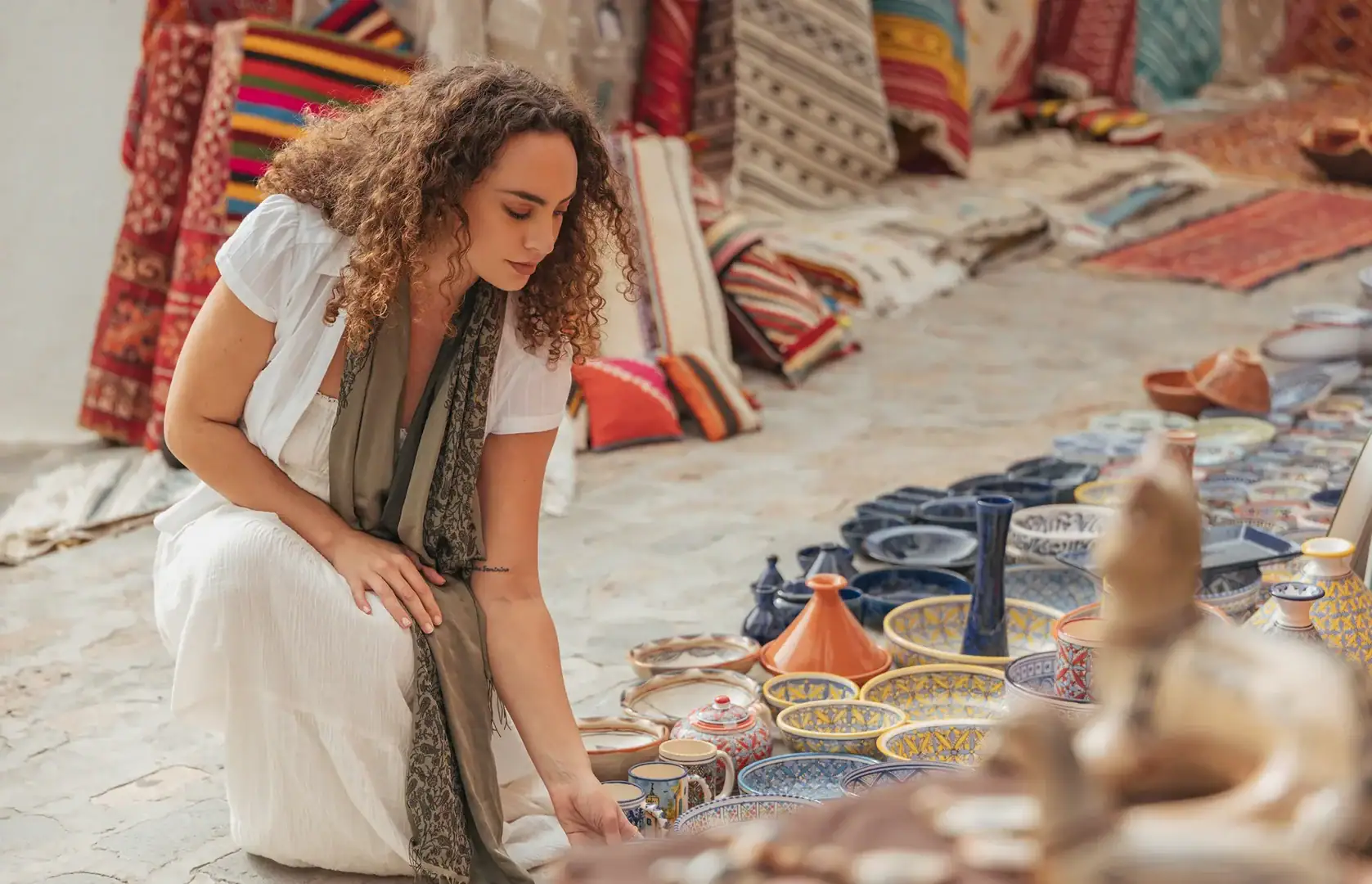
Tunis shopping is at its most atmospheric inside the Medina, where covered passages, mosque courtyards, workshops and specialised commercial streets form a living historic district. You can browse ceramics, textiles, leather, jewellery, fragrance, spices and metalwork, but the experience is not a single tourist market with one set of prices or practices.
Table of Contents
This guide to shopping in Tunis helps you understand how the souks fit together, what to inspect before buying and how to move through the Medina with confidence. Our Verdi team recommends allowing time to compare, ask questions and notice everyday local commerce beyond the first souvenir displays.
What Is Shopping in the Tunis Medina Like?
Shopping in the Tunis Medina is lively, varied and more organised than it first appears. Different lanes developed around particular trades, so you may move from perfume sellers to fabric shops, jewellers or leatherworkers within a few turns. Some sellers invite bargaining, while others use fixed prices. Navigation takes patience because narrow streets and covered sections can reduce map accuracy, but well-known gates, mosques and squares make reliable landmarks.
Understanding the Tunis Medina and Its Souks
A souk in Tunis can mean a market area, a named covered passage or a specialised commercial street within the wider Medina. Historically, trades clustered together. Fragrant or prestigious goods often sat near major religious buildings, while noisier crafts and heavier work occupied streets farther out. That pattern still helps you read the district, even though individual shops, opening patterns and product mixes change over time.
The Medina is also home to homes, schools, hammams, cafés, mosques and workshops. Move with the same courtesy you would use in any lived-in neighbourhood. A doorway may lead to a family courtyard rather than a shop, and a quiet lane may become busy when local errands begin.
What to Buy in the Tunis Medina
The most useful Tunis shopping question is not only what to buy in Tunis, but what suits your taste, luggage and confidence in assessing materials. Use the comparison table as a starting point.
Product | What to inspect | Portability | Good for |
Ceramics | Glaze, chips, cracks, maker marks and food-safe guidance | Fragile; ask for layered wrapping | Tableware and decorative pieces |
Textiles | Fibre content, weave, seams, colourfastness and dimensions | Easy to pack | Throws, scarves and cushion covers |
Leather | Stitching, edge finish, lining, zip quality and smell | Usually easy | Bags, belts and small goods |
Jewellery | Metal purity, hallmarks, stone setting and receipt details | Very easy | Personal gifts and keepsakes |
Fragrance | Ingredients, concentration, bottle seal and skin testing | Check liquid limits | Oils and traditional scents |
Spices | Freshness, aroma, packaging and ingredient labelling | Easy if sealed | Home cooks |
Metalwork | Weight, joins, sharp edges and surface finish | Bulky for large pieces | Lanterns, trays and décor |
Ceramics and Painted Tableware
Tunisian ceramics range from practical bowls to highly decorative plates. Inspect the rim and base for chips, run a finger carefully over the glaze and ask whether the piece is intended for food use or display. For several pieces, request individual wrapping plus a rigid outer box; clothing can add cushioning inside your suitcase.
Textiles, Rugs and Embroidery
Ask what fibre a textile contains and whether the colour may run. Check the reverse of embroidered work, where neat finishing often reveals more than the front. For rugs, confirm exact measurements and photograph the item beside its label or receipt before it is folded for collection or shipping.
Leather Goods
Look beyond colour. Check that stitching runs evenly, edges feel smooth and hardware opens cleanly. A strong chemical smell may indicate heavy surface treatment, while natural variation alone does not prove that an item is handmade. Compare similar pieces in several shops before deciding.
Jewellery, Fragrance, Spices and Metalwork
For jewellery, ask clearly about metal content and request written details for higher-value purchases. Test fragrance oils on a blotter or a small area of skin rather than buying on scent alone. Buy spices from a seller who can explain the product and provide clean packaging. With lamps, trays and other metalwork, inspect joins and ask how the surface should be cleaned at home.
How to Identify Locally Made Products
The words ‘Tunisian handicrafts’ do not guarantee that every item in view is locally made. Ask neutral, specific questions: Where was this made? Is there a workshop nearby? What material is used? Can I see another piece by the same maker? A good seller should be able to answer without relying only on broad claims.
Look for evidence of process, such as tools, unfinished pieces, small variations between items or a clear maker story. Compare several shops and handle products where invited. Locally made goods can be polished and consistent; imported goods can look rustic. Appearance alone is not proof, so combine observation with questions and documentation.
How Bargaining Works
Bargaining varies by seller, product and shop type. Some traditional shops expect a conversation about price; others display fixed prices and do not negotiate. Begin by deciding what the item is worth to you. Ask the price, respond calmly and make a reasonable counter-offer only when the interaction feels open to it.
Keep the exchange friendly, avoid criticising the product to force a discount and be prepared to walk away politely. You are never obliged to buy because a seller has spent time showing you goods. Equally, repeated bargaining after agreeing a price can damage goodwill. Shopping in Tunis works best when both sides feel respected.
How to Navigate the Souks
The souks of Tunis reward landmark-based navigation. Save pins for your entrance, hotel or taxi meeting point, but do not expect a blue dot to remain exact under covered roofs and between narrow walls. Note recognisable places such as Bab el Bhar, Zitouna Mosque and major squares, and ask for these names rather than a small shop that may be unknown outside its lane.
- Download an offline map before entering the Medina.
- Photograph the street sign or gate where you enter.
- Allow extra time; a wrong turn often becomes part of the visit.
- Arrange a precise meeting point for taxis or companions.
- Ask shopkeepers or café staff for a recognised monument when you need directions.
For the wider city, read our Tunisia public transportation guide before deciding how to reach and leave the Medina.
Practical Shopping Tips
- Carry some Tunisian dinars in small denominations. Card acceptance varies, and equipment or connections may not always work.
- Ask for a receipt for valuable items and make sure it describes the product accurately.
- Confirm the final price, currency and any card fee before payment.
- For fragile goods, inspect the item again after it has been wrapped.
- For larger purchases, agree in writing who pays for packing, insurance, customs charges and delivery to your address.
- Check current customs and import rules in the UK before buying food, plant products, antiques or high-value goods.
- Opening hours change around religious observances, public holidays and individual shop routines, so verify time-sensitive details locally.
- Ask before photographing people, workshops or the inside of shops.
Keep your overall spend in perspective with Verdi’s budget-friendly guide to Tunisia.
Shopping Etiquette and Personal Comfort
A greeting makes a difference. A simple bonjour or aslema opens the interaction warmly, and a clear ‘no, thank you’ is enough when you do not wish to browse. Dress with awareness of religious and residential surroundings, especially near mosques, and avoid blocking narrow passages while comparing purchases.
Keep valuables secure as you would in any busy city district. Persistent invitations can feel tiring, but they do not require a confrontational response. Step into a café, return to a main landmark or use a licensed guide when you want more structure. The aim is reassurance, not fear: most visits are enjoyable when you stay observant and set your own pace.
A Suggested Shopping Route Through the Tunis Medina
Begin near Bab el Bhar, the Sea Gate, where the Ville Nouvelle meets the old city. Walk towards the central religious and commercial area, using Zitouna Mosque as your principal landmark. From there, choose one or two specialist lanes that match your interests rather than trying to cover every souk.
Pause for tea or coffee, then loop back by a different street to compare prices and workmanship. This is a flexible shopping route through the Tunis Medina, not the only correct path. A guide can add historical context, while an independent visit gives you more time to browse. Whichever you choose, arrange a clear exit point before the shops begin closing.
Nothing Like Relaxing at Verdi Hotels After a Day of Shopping
The Medina becomes more rewarding when you resist the urge to buy from the first display. Ask questions, compare materials and leave space for the workshops, carved doors and everyday scenes between shops. Then return somewhere calm enough to unwrap your finds and review the day without rushing into the next plan.
Make Verdi your base for Tunis shopping and culture. Explore Verdi Tunis and plan a city stay that keeps the Medina within easy reach.
Frequently Asked Questions About Shopping in the Tunis Medina
What should tourists buy in Tunis?
Popular choices include ceramics, textiles, leather goods, jewellery, fragrance oils, spices and decorative metalwork. Choose according to quality, provenance and how safely you can transport the item.
Do you need to bargain in the Tunis Medina?
No. Some sellers welcome bargaining, while fixed-price shops also exist. Ask the price, read the interaction and decline politely when you do not wish to negotiate.
Can you pay by card in the Tunis souks?
Some shops accept cards, but cash remains useful and card facilities can vary. Confirm the currency, total and any fee before authorising payment.
How do you avoid getting lost in the Tunis Medina?
Use major gates, mosques and squares as landmarks, save offline maps and photograph your entry point. Allow extra time because phone location can be imprecise in covered lanes.
Are the souks in Tunis open every day?
Many shops trade most days, but hours vary by business, season, religious observance and public holiday. Check locally for the day of your visit.
How can you tell whether a product is handmade?
Ask where and how it was made, compare several examples and look for workshop evidence or maker information. Do not rely on appearance or a verbal claim alone.
Is it possible to ship larger purchases home?
Often, yes, but agree packing, insurance, carrier, customs responsibility and delivery terms in writing. Keep photographs and receipts.
What should visitors wear in the Tunis Medina?
Wear comfortable shoes and clothing suitable for warm weather and a culturally mixed, partly religious district. A light layer is useful when visiting more conservative sites.