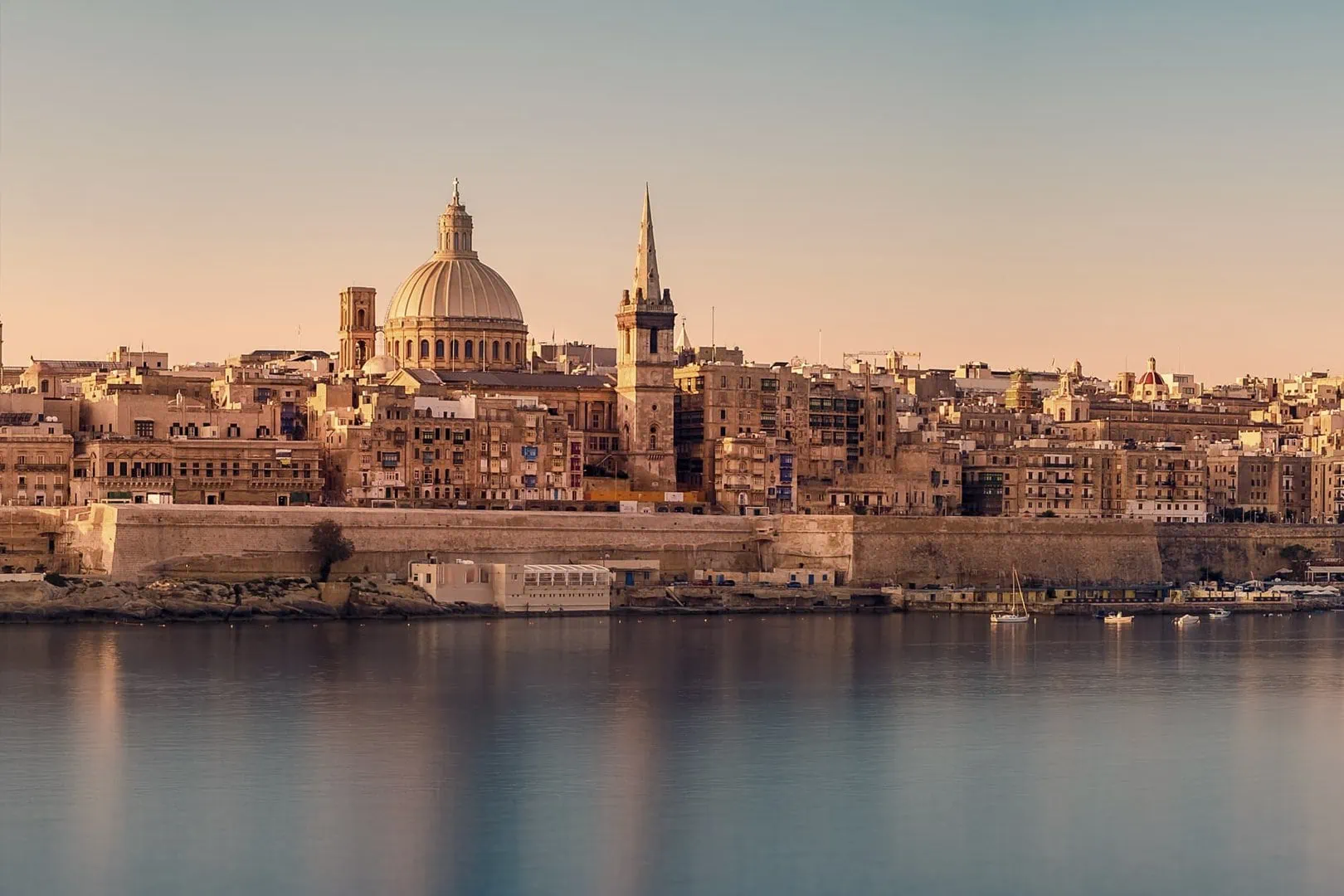
Valletta is one of the world’s great small capitals. It is also, in July and August, a serious test of your relationship with the sun. The narrow limestone streets that give the city its character act as heat traps by midday: radiant, glaring, relentless. And yet the people who know this city best, who come back year after year, all say the same thing. Valletta in summer, navigated correctly, is exceptional.
Table of Contents
The things to do in Valletta are reason enough to visit in any season. But in summer there is a version of the city that opens up after 6pm, when the light turns copper on the harbour and the streets cool by degrees, that no other time of year can replicate. This guide gives you the attractions, the timing, and the shade.
On the weather: June averages around 28C in Valletta, July climbs to 33C, and August peaks between 34 and 36C, sometimes higher. Sea breezes from the Grand Harbour provide some afternoon relief. Evenings across all three months are delightful. The key to enjoying Valletta in summer is the same as it is for any sun-drenched Mediterranean city: move early, pause in the middle of the day, and return in the evening.
Valletta in Summer: Weather in June, July and August
A concise month-by-month breakdown so you can plan your visit around the conditions rather than despite them:
Month | Avg Temp | Crowd Level | Key Events | Best For |
|---|---|---|---|---|
June | 28C | Moderate | Valletta Film Festival (outdoor screenings) | Balance of heat, events, and manageable crowds |
July | 33C | High | Malta Jazz Festival (Grand Harbour) | Festivals, long evenings, sea swimming |
August | 34 to 36C | Peak | Village festas across Malta | Atmosphere, evening passeggiata, festa season |
The Grand Harbour orientation means the city catches sea air on most summer afternoons. It is not the same as a breeze, but it is the difference between uncomfortable and unbearable. Evenings in Valletta across all three months are genuinely pleasant: cooler air, low light, locals back on the streets. Plan to be outside again by 6pm.
The Best Things to Do in Valletta
These are the attractions worth your time, described as they feel rather than as they appear in a brochure. Visiting Malta this summer? Verdi’s Malta waterfront hotels are the perfect base for exploring Valletta and everything beyond it.
St John’s Co-Cathedral
Book ahead. The interior of St John’s is one of the great surprises of European art: the nave floor is entirely paved with the marble tombstones of Knights, over 400 of them, and two of Caravaggio’s finest paintings hang in the oratory. The cathedral is air-conditioned by its own stone mass, cool and quiet even in August. It functions as both a cultural experience and a practical heat escape. Entry is ticketed; timed entry slots are available online. Covered shoulders and knees required.
Upper Barrakka Gardens
Free, open to all, and offering the most direct view of the Grand Harbour available from within Valletta’s walls. The gardens have shaded corners and benches under parasols. Go early morning for the cool and the light, or after 6pm for the harbour turning amber as the sun drops. The Saluting Battery below fires a cannon at noon and 4pm daily: time your visit accordingly if you’re travelling with children.
Grand Master’s Palace
The palace that anchors the top of Republic Street. The State Rooms and the Armoury are both indoors and both substantial. The Armoury in particular, with its full suits of armour and thousands of weapons, earns more time than most visitors give it. Air-conditioned and rarely over-crowded, it is an ideal midday stop.
Strait Street
Valletta’s former sailor’s quarter, once known as ‘the Gut’, now a street of low-ceilinged bars, art spaces, and restaurants where locals and visitors overlap at roughly equal proportion. In the evening, when tables spill onto the narrow lane and the light comes from inside rather than above, Strait Street is one of the most atmospheric places in the city. Several bars open from around 5pm. Go in the evening and stay for dinner.
National War Museum at Fort St Elmo
At the tip of the Valletta peninsula, overlooking the harbour entrance. The museum covers Malta’s extraordinary role in the Second World War with unusual depth, and the fort’s thick stone walls make it naturally cool. Rarely over-crowded. Budget 90 minutes.
Valletta Waterfront and the Ferry to the Three Cities
The ferry from Valletta’s waterfront terminal to the Three Cities (Vittoriosa, Senglea, and Cospicua) takes around ten minutes and costs less than EUR 2. The Three Cities are quieter than Valletta, the streets are narrower, and the harbour views back towards the capital are among the finest in Malta. It is the day trip that most Valletta visitors don’t take. Take it. More context in our guide to a perfect one-day itinerary for Malta.
For a deeper look at the island’s historical sites beyond Valletta, our guide to top historical places in Malta covers the wider landscape. And for a less-visited take on the island, our alternative sightseeing tours in Malta guide is worth reading before you plan your days.
Cool Escapes: Beating the Heat Inside Valletta
When midday arrives, stop walking and go inside. The best options:
- St John’s Co-Cathedral. Already covered above. The coolest indoor space in the city.
- MUZA, Malta’s National Community Art Museum. The former Auberge d’Italie, now a contemporary art museum with permanent and rotating exhibitions. Air-conditioned, free on Saturdays, and rarely busy.
- Casa Rocca Piccola. A noble house museum run by the Marquis de Piro and his family. Cool stone interiors, an eccentric personal collection, and a refreshingly un-corporate atmosphere.
- Any baroque church. Valletta has more churches than streets. They are almost always unlocked during the day, always cool, and almost always empty. St Paul’s Shipwreck, St Catherine of Italy, St Augustine: any of them.
When to Visit Valletta in Summer: The Local Timing Guide
The timing advice that makes the real difference:
Before 9am. The limestone streets are quiet and golden. St John’s has no queue. The Upper Barrakka Gardens belong to the pigeons and the early-morning joggers. This is Valletta at its most beautiful, and the heat is entirely manageable. It is worth setting the alarm.
Midday to 3pm. Step inside. A long lunch in an air-conditioned restaurant, an afternoon in a museum, a coffee in a cool cafe on Republic Street. This is not wasted time; it is how the city functions.
4pm onwards. The heat begins to ease. Streets fill with a more local rhythm. Shops reopen. The energy shifts.
After 6pm. Evening Valletta is the reason to be here in summer. The light on the harbour is extraordinary. Strait Street fills up. Restaurant tables move outside. Locals begin their passeggiata along Republic Street. The city that was glaring at noon is now, quite simply, one of the nicest places in the Mediterranean to spend an evening.
For the broader question of when to plan your Malta visit, our guide to the best time to visit Malta covers all seasons in detail. And for how to experience the island as its residents do, our live like a local in Malta guide is the companion piece.
Summer Events in Valletta: What’s On in June, July and August
Valletta Film Festival (June) brings outdoor cinema screenings to palace squares, terraces, and open-air venues across the city. The combination of heritage settings and summer evenings makes it one of the better cultural events in the Mediterranean calendar. Programmes are published on the festival website in April.
Malta Jazz Festival (July) takes place over three evenings at the Grand Harbour, with stages set against the city walls. This is one of the Mediterranean’s genuinely great summer music events: the setting alone justifies attending even if jazz is not your primary interest. Book ahead; it sells out.
Village festas across Malta run from June through August, with each town celebrating its patron saint with fireworks, processions, brass bands, and food stalls. Several towns within easy reach of Valletta hold festas across the summer months. The calendar is published annually at visitmalta.com.
If you’re also thinking about Malta’s autumn events calendar, our guide to Malta autumn events covers what follows the summer season. For a broader picture of Maltese celebrations year-round, our carnival in Malta guide is worth reading.
Beyond the City Walls: A Summer Day Trip from Valletta
The Three Cities
The ten-minute ferry from Valletta’s waterfront is the most underused short journey in Malta. Vittoriosa, Senglea, and Cospicua are quieter, older-feeling, and offer harbour views back across to Valletta that no viewpoint inside the capital can match. A morning in the Three Cities and lunch back in Valletta is a near-perfect summer half-day.
Mdina
The medieval walled city in the centre of the island is best visited before 10am. Elevated and breezy, Mdina is a degree or two cooler than Valletta in summer, and the narrow streets in early morning are as close to empty as they ever get. Our guide to Mdina, discover a magical Maltese town covers the town in detail.
Marsaxlokk Sunday Market
The fishing village on the south coast hosts a Sunday morning market with fresh seafood, local produce, and lace. The harbour front, with its brightly painted luzzu fishing boats, is one of Malta’s most photographed scenes. Our guide to things to do in Marsaxlokk covers how to make the most of the village beyond the market.
Where to Stay: Verdi’s Malta Hotels
Valletta is a short drive or taxi from Verdi’s Malta properties, which sit on the island’s northern coastline within easy reach of St Julian’s and the main road network. Our team can advise on the best morning timing for each attraction, which days the city is quietest, and where the evening passeggiata ends up in summer.
Book your stay in Malta with Verdi and let our team help you plan the perfect morning in Valletta. Find availability at Verdi Malta waterfront hotels.
Frequently Asked Questions
What is the weather like in Valletta in July?
Valletta in July averages around 33C. The Grand Harbour position brings sea breezes on most afternoons. Evenings cool to around 24 to 25C. The hottest hours are typically between 12pm and 4pm; mornings and evenings are the best times to be outdoors.
What are the best things to do in Valletta in summer?
St John’s Co-Cathedral (book ahead), the Upper Barrakka Gardens (early morning or evening), Strait Street in the evening, the National War Museum at Fort St Elmo, and the ferry to the Three Cities. The Valletta Film Festival (June) and Malta Jazz Festival (July) are also worth planning around.
How hot does Valletta get in August?
August is Malta’s hottest month. Valletta typically reaches 34 to 36C, occasionally higher during heatwaves. Humidity is lower than in some Mediterranean destinations, and sea breezes help. Evenings remain warm and pleasant. Morning and evening visits to the main sights are strongly advisable.
Is Valletta worth visiting in summer?
Yes, with the right approach. The city is most rewarding before 9am and after 6pm. The midday heat is real, but the city’s museums, churches, and restaurants provide ample cool retreat. The summer events calendar (film festival, jazz festival, village festas) adds a layer of atmosphere that other seasons don’t offer.
What is the Valletta Film Festival?
The Valletta Film Festival takes place each June and brings outdoor and indoor screenings to heritage venues across the capital, including palace squares and terraces. It covers international and Maltese cinema, with several screenings in English or with English subtitles. Programmes and tickets are available at vallettafilmfestival.com.